Etruscan Heritage
Traces of the Etruscans
Before being a vacation destination, these hills were Etruscan land.
Just a few minutes from Etrusco Camping Village, the archaeological site of Poggio Civitate preserves one of the most important testimonies of Northern Etruria.
Discovering Murlo means coming into contact with a past that is not distant, but still present in the landscape.
Curiosities
In Murlo, the famous terracotta statues that decorated Etruscan buildings were found, including the figure known as the "Prince of Murlo". It was not a prince in the modern sense, but probably a figure of prestige linked to political or religious power.
The buildings of Poggio Civitate, dating back to the 7th century BC, were monumental and richly decorated: a sign of an evolved community, organized and deeply connected to the territory.
Walking today among these hills it is striking to imagine the life that took place here over two thousand years ago, between craftsmanship, exchanges and relations with other centers of Etruria.
Places to Visit
Poggio Civitate
Among the woods of Murlo, an apparently silent hill preserves one of the most important Etruscan discoveries in central Italy.
At Poggio Civitate, over 2,700 years ago, stood a monumental building: a center of power, of meetings and of decisions.
Today the silence of the landscape remains. Then it was a living place, strategic, chosen with care. The terracotta decorations found in the excavations — like the famous figure of the "Cappellone" — tell of the importance and sophistication of this community.
Walking here means traversing a history that is not far away, but rooted in the same land that surrounds the campsite.
Distance: about 10 km (15 minutes) from Etrusco Camping Village
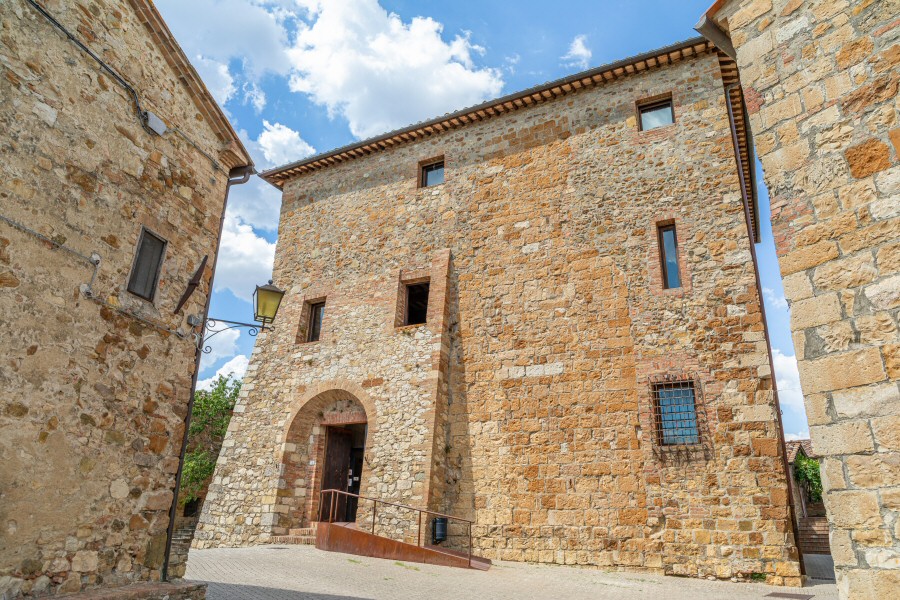
Archaeological Museum of Murlo
In the heart of the medieval village, the Archaeological Museum of Murlo gathers the testimonies emerged from the excavations of Poggio Civitate and the surrounding territory.
Here history takes concrete form: everyday objects, architectural decorations, fragments that tell the life, power and vision of the Etruscans. Among the most iconic works stand out the reconstructions of terracotta decorations and the figure of the famous "Cappellone", symbol of the local Etruscan community.
Distance: about 10 km (15 minutes) from Etrusco Camping Village
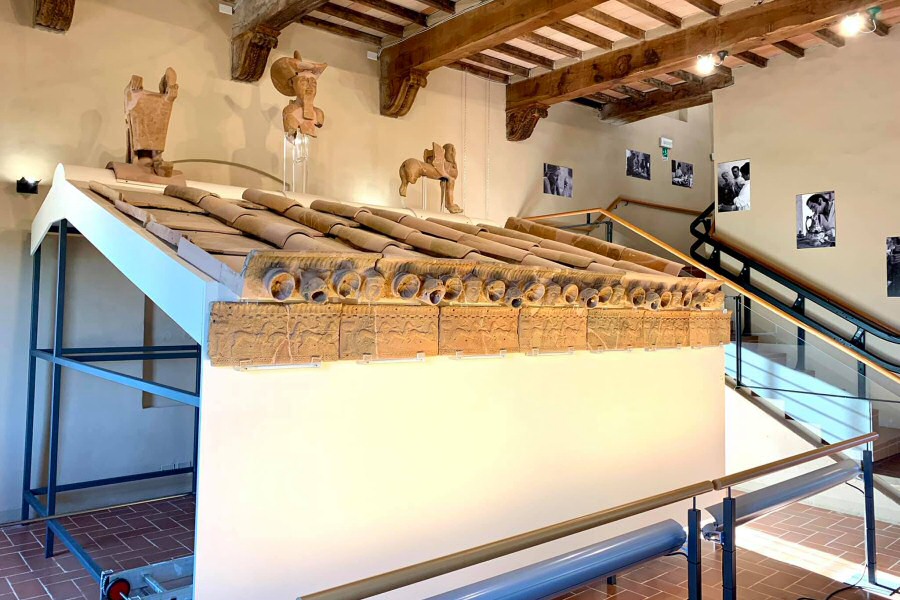
Roselle
A few kilometers towards the Maremma, Roselle tells the more monumental face of Etruscan civilization.
Its imposing Cyclopean Walls, built with enormous stone blocks fitted together, are still perfectly visible today and delineate the perimeter of the ancient Rusellae, a powerful and strategic city. Around it, the Roselle Archaeological Park testifies to the rank and organization of a structured community, aware of its own identity.
The original urban layout, born in the Etruscan period and later expanded by the Romans, tells of a living city, carefully thought out and planned. Here greatness is tangible: not just artifacts, but spaces, proportions and architectures that restore the idea of a civilization capable of dominating the territory.
Distance: about 50 km (45 minutes) from Etrusco Camping Village
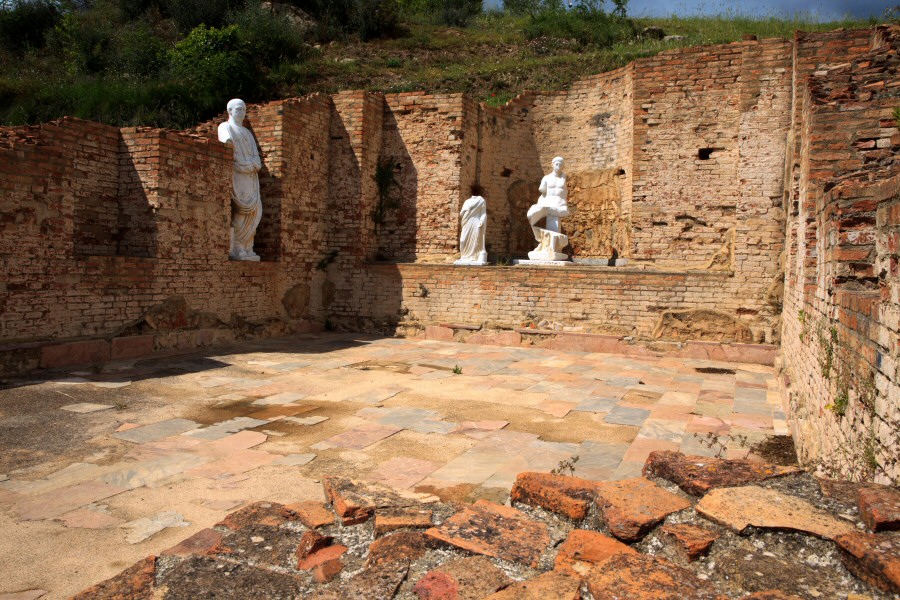
Vetulonia
Among the hills overlooking the Maremma, Vetulonia was one of the most important cities of ancient Etruria, a rich and influential center since the 9th century BC.
Famous for its Monumental Necropolises, it preserves imposing tumulus tombs such as the Tomb of Pietrera and the Tomb of Diavolino, majestic structures that tell of the prestige of Etruscan elites. Here power was expressed through funerary architecture, a symbol of rank and identity.
Vetulonia restores the image of a refined civilization, capable of intertwining commerce, craftsmanship and relationships in the heart of the Maremma.
Distance: about 82 km (1 hour and 10 minutes) from Etrusco Camping Village
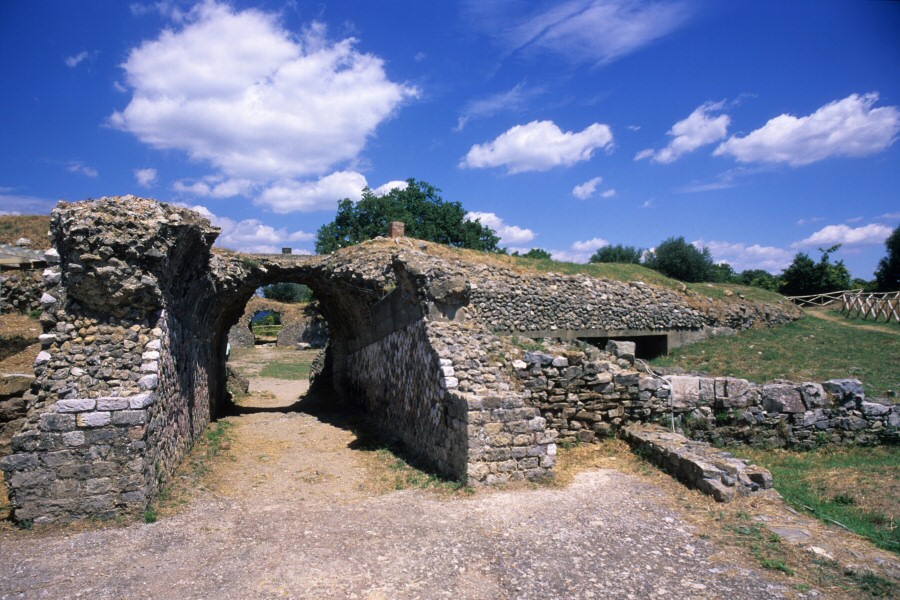
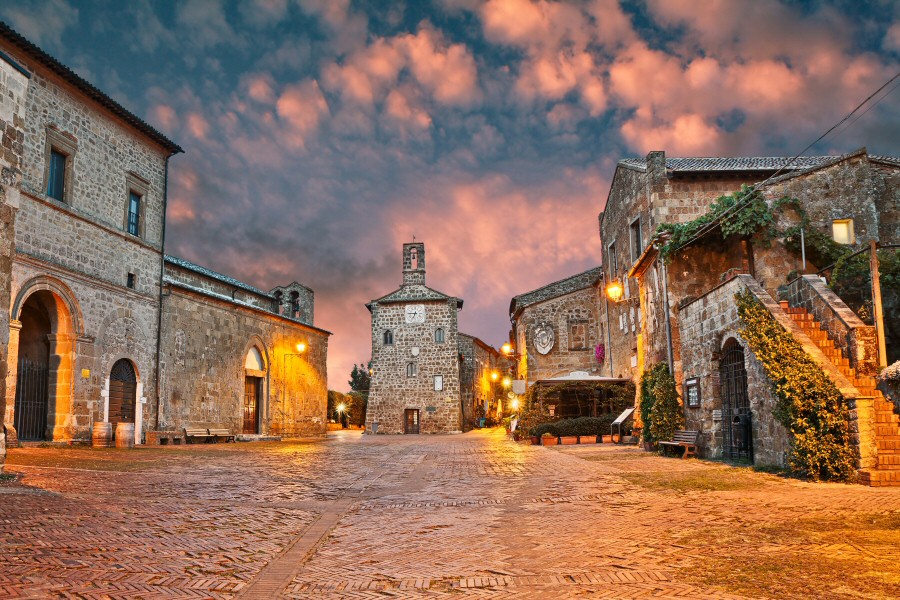
Sovana
Sovana preserves one of the most fascinating Etruscan landscapes in Tuscany. Around the village wind the famous Carved Roads, deep streets carved into the tufa rock, some meters high, that connected necropolises and settlements.
Walking inside these stone corridors means entering a unique work, modeled directly in the tufa over two thousand years ago. The vertical walls, marked by time, create a suspended, almost sacred atmosphere.
Here Etruscan ingenuity is not limited to construction, but transforms the landscape itself, leaving a sign that is still powerful and mysterious today.
Distance: about 105 km (1 hour and 50 minutes) from Etrusco Camping Village
Choose how to experience Etrusco
Between relaxation, nature and freedom
